近期,澜湄区域及周边国家接连发生旅客通过航空、陆路口岸非法携带、托运野生动物及其制品出入境的案件。相关案件中,涉案物品既包括活体灵长类、龟类、鸟类和爬行动物,也包括象牙、犀牛角、穿山甲鳞片、动物皮毛、骨骼、蛋类、标本及其他衍生制品。
野生动物及其制品的跨境流通往往同时受到出境国、入境国、中转国法律以及《濒危野生动植物种国际贸易公约》的共同管制。即使相关物品在购买地公开出售、价格不高或持有普通购物凭证,也不代表可以合法携带出入境。未经许可购买、持有、运输、携带、托运或邮寄受保护物种及其制品,可能面临严重后果。
为帮助区域各国民众及跨境流动人员识别相关风险,保护自身合法权益,澜湄执法合作中心结合公开案例和区域实际情况,作出以下提醒:
风险研判
边境集市和非正规渡运可能成为非法交易节点
近期案件显示,非法野生动物交易不仅发生在机场、口岸和城市商铺,也可能隐藏于边境集市、临时通关点和湄公河沿岸。犯罪人员利用边民往来频繁、交易品种复杂等特点,将活体动物及其制品夹带在普通货物中,通过小型船只、车辆或人员行李跨境运输,再在市场、码头或临时约定地点完成交接。
线上交易和熟人关系成为招募运输人员的重要渠道
部分跨国犯罪团伙利用网络社交媒体和网络交易平台,以“珍稀宠物交易”“旅游纪念品代购”“有偿携带”“顺路帮带”“土特产运输”“个人收藏”“药材采购”等名义,招募旅客、留学生、跨境务工人员、航空从业人员和频繁出入境人员携带相关物品。还有不法商家以“人工繁育”“正规商店购买”“附带发票”“个人自用不需要申报”等说法误导旅客,诱使其购买、运输或邮寄来源不明的野生动物及其制品。对方提供的发票、收据或口头承诺,并不能证明相关物品具备合法来源,也不能替代出入境所需的许可证、检疫证明和主管部门批准文件。
经过加工包装后,容易将野生动物及其制品误认为是普通商品
针对野生动物及其制品的非法交易包括对野生动物制品进行加工、分装和再销售。相关案件显示,涉案物品包括象牙制品、犀牛角制品、动物胆囊、鳞片粉、骨骼、牙齿及疑似含野生动物成分的草药等,部分还配有专门的加工设备。相关物品可能被装入纸盒、袋装包装、药材包装、雕像、箱包或其他外观正常的容器中。旅客如果只根据商品名称、包装和销售场所判断其是否合法,容易在不知情或未充分核实的情况下承担法律风险。
“个人携带”和“少量自用”不一定免除申报义务
一些旅客误认为,少量购买、个人收藏、旅游纪念品或自用药材不属于跨境贸易,无需申报。实际上,野生动物及其制品是否可以出入境,通常取决于具体物种、制品来源、运输方式以及出境国、过境国和入境国的法律规定。即使相关商品在购买地公开销售,或者商家声称属于人工繁育、合法加工,也不代表其能够通过其他国家或地区的海关、检疫和野生动物保护审查。特别是涉及《濒危野生动植物种国际贸易公约》所列物种及其制品时,旅客应在出行前核实相关许可和证明文件要求。
真实案例
泰国廊开边境市场查获活体穿山甲及野生动物尸体
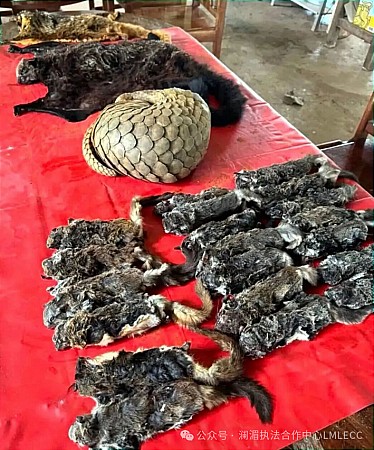
2026年7月19日,泰国警方联合相关部门,在廊开府拉塔那瓦比县班蓬占泰老边境集市开展行动,抓获1名涉嫌非法交易野生动物的老挝籍涉案人员。执法人员现场查获1只活体马来穿山甲,重约6公斤,以及22具不同种类的鼯鼠类野生动物尸体。调查显示,相关野生动物疑似通过小型船只从老挝运过湄公河,随后在边境集市内联系买家进行交易。
老挝琅勃拉邦查获大规模野生动物制品窝点
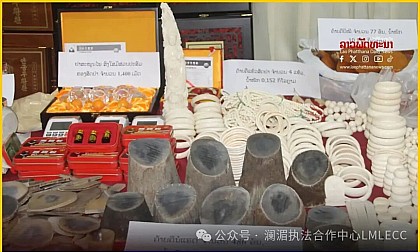
2026年6月30日,老挝野生动物执法网络在琅勃拉邦市桑卡洛村开展突击检查,并抓获1名涉案嫌疑人。执法人员查获疑似象牙制品714件、象皮粉213盒及1袋、犀牛角制品486件、犀牛角粉2袋、穿山甲鳞片3盒及鳞片粉17袋和88盒、熊胆77个,以及野生动物骨骼、角、牙齿、疑似含野生动物成分的草药1400支(片)和加工设备10台。
泰国湄公河沿岸查获准备走私至老挝的象牙
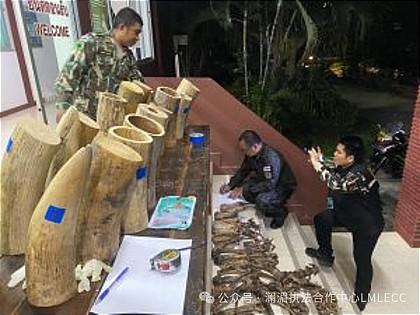
2026年5月16日,泰国警方在廊开府湄公河沿岸查获22段切割象牙,重约130.9公斤,以及约29公斤野生动物骨骼。嫌疑人将涉案物品装袋并准备通过水路运往老挝,涉案人员逃离现场。泰方已与老挝有关部门共享案件信息,协同扩大调查。
犀牛角藏入装饰雕像,经万象机场查获
2026年5月15日,老挝警方在万象瓦岱国际机场旅客查验中,发现4支疑似犀牛角,总重约10.1公斤,并抓获1名越南籍涉案人员。涉案物品被藏在黑色装饰雕像内部,货物从非洲安哥拉出发,经两个国家中转后抵达万象。

安全提示
针对当前犯罪网络招募人员参与跨境非法运输野生动物及其制品的风险,澜湄执法安全合作中心向区域各国公众及跨境流动人员提示如下:
(一)出境前了解目的地国家法律规定
出行前应主动查询出境国、过境国和目的地国家关于野生动物及其制品的禁限运规定,确认是否需要《濒危野生动植物种国际贸易公约》许可证、进出口许可、检疫证明等文件。对物种、来源或法律属性无法确认的物品,不要购买和携带。
(二)不购买、不携带来源不明的野生动物及其制品
无论相关制品被称为“纪念品”“药材”“保健品”“古董”“工艺品”还是“人工繁育产品”,均不要购买、托运、邮寄或转交来源不明的象牙、犀牛角、穿山甲鳞片、动物皮毛、骨骼、牙齿、熊胆、标本及活体动物。
(三)坚决拒绝替他人携带不明行李和包裹
不要因“帮忙占行李额度”“代购交付”“客户样品”“朋友托付”等理由,替陌生人、网友、商家、导游、客户或熟人携带本人无法独立检查的箱包、包裹和物品。对方提供的购物发票、商家证明、口头承诺或所谓“合法证明”,不能替代海关、野生动物主管部门依法签发的许可文件。
(四)切勿以“我不知情”作为安全保障
是否知情,通常需要结合购买价格、聊天记录、资金往来、物品交接、包装方式、运输路线、申报情况和当事人行为综合判断。即使最终未被追究刑事责任,当事人仍可能面临物品扣押、调查审查、罚款、遣返、诉讼和经济损失。
(五)发现可疑情况应立即停止行程并主动求助
如发现物品存在异常夹层、异味、重量、包装或来源,或委托方要求隐瞒物品、绕开查验、临时改变交接地点,应立即停止携带和交付。不要自行转交、放生、丢弃或销毁可疑动物及其制品。
应在确保自身安全的前提下,及时联系当地警方、海关、机场安保、野生动物主管部门、承运机构或本国驻外使领馆,并妥善保存聊天记录、转账凭证、物品照片、联系方式、交接地点和相关票据。
野生动物不是普通商品,旅客行李也不是非法交易的运输工具。没有买卖,就没有杀害;保护野生动物,就是保护我们共同的家园。澜湄执法合作中心将继续与区域各国紧密协同,以坚实的行动筑牢区域安全屏障,维护区域安全稳定,增进民生福祉。
澜沧江-湄公河综合执法安全合作中心
(发布日期:2026年8月3日)
LMLECC Security Alert
(Alert No. 2026004)
-Beware of the Cross-Border Illegal Trafficking of Wildlife and Wildlife Products
Recently, a number of cases have been reported in the Lancang-Mekong region and neighboring countries involving the illegal cross-border carrying or checking-in of wildlife and wildlife products by air passengers and persons using land-border crossings. The items involved have included live primates, turtles, birds and reptiles, as well as ivory, rhino horn, pangolin scales, animal skins, bones, eggs, specimens and other wildlife derivatives.
The cross-border movement of wildlife and wildlife products is often subject to the laws of the country of departure, the destination country and any transit countries, as well as the Convention on International Trade in Endangered Species of Wild Fauna and Flora (CITES). The fact that an item is openly sold in the place of purchase, is relatively inexpensive, or is accompanied by an ordinary receipt does not mean that it may be legally carried across a border. The unauthorized purchase, possession, transportation, carriage, checking-in or mailing of protected species or their products may result in serious legal consequences.
To help members of the public and cross-border travelers in the region identify relevant risks and protect their legitimate rights and interests, the Lancang-Mekong Integrated Law Enforcement and Security Cooperation Center issues the following alert based on publicly reported cases and regional conditions:
Risk Assessment
Border markets and informal crossings may serve as nodes in illegal wildlife trade
Recent cases indicate that illegal wildlife transactions occur not only at airports, formal border checkpoints and urban shops, but may also be concealed in border markets, temporary crossing points and areas along the Mekong River. Taking advantage of frequent cross-border movement and the wide variety of goods traded in these areas, criminal actors may conceal live animals and wildlife products among ordinary merchandise and transport them across borders by small boats, vehicles or personal luggage before handing them over at markets, ports or prearranged locations.
Online transactions and personal connections are becoming important channels for recruiting couriers
Some transnational criminal groups use social media and online trading platforms to recruit passengers, international students, cross-border workers, aviation personnel and frequent travelers under the guise of “rare pet trading,” “tourist souvenir purchases,” “paid carriage,” “helping someone along the way,” “local specialty transportation,” “private collecting” or “medicinal-material procurement.”
Some unscrupulous businesses also mislead travelers by claiming that the products are “captive-bred,” “purchased from a legitimate store,” “accompanied by an invoice,” or “for personal use and therefore exempt from declaration.” Such claims may induce travelers to purchase, transport or mail wildlife and wildlife products of unknown origin. Invoices, receipts or verbal assurances provided by the other party do not establish that the items have a lawful source, nor can they replace the permits, quarantine certificates or approvals required by the relevant authorities for cross-border movement.
Processing and repackaging can make wildlife and wildlife products look like ordinary goods
Illegal wildlife trafficking may involve not only the direct transport of animals or intact animal parts, but also the processing, repackaging and resale of wildlife products. Recent cases have involved ivory products, rhino horn products, animal gallbladders, powdered scales, bones, teeth and herbal products suspected of containing wildlife ingredients. Some locations were also found equipped with specialized processing machinery.
Such items may be packed in paper boxes, bags, medicine or herbal-material packaging, decorative statues, suitcases or other containers with an ordinary appearance. Travelers who judge legality solely by a product’s name, packaging or place of sale may unknowingly assume legal risks without adequately verifying the item’s origin and regulatory status.
Personal carriage and small quantities for personal use do not necessarily exempt travelers from declaration requirements
Some travelers mistakenly believe that small quantities, personal collections, tourist souvenirs or medicinal materials for personal use do not constitute cross-border trade and therefore do not need to be declared. In reality, whether wildlife or wildlife products may legally cross a border generally depends on the specific species, the origin of the product, the method of transportation, and the laws of the country of departure, any transit country and the destination country.
Even if an item is openly sold at the place of purchase, or a seller claims that it is captive-bred or legally processed, this does not mean that it will pass customs, quarantine or wildlife-protection inspections in another country or region. Where species or products listed under CITES are involved, travelers should verify in advance the applicable permit and documentation requirements.
Real Cases
Live pangolin and wildlife carcasses seized at a border market in Nong Khai, Thailand
On July 19, 2026, Thai police, together with relevant authorities, conducted an operation at a border market near the Ban Phong Chan temporary Thai-Lao crossing in Rattanawapi District, Nong Khai Province. A Lao national suspected of engaging in the illegal wildlife trade was detained. Officers seized one live Sunda pangolin weighing approximately six kilograms and 22 carcasses of flying squirrels, reportedly including several species. Investigators believe that the wildlife may have been transported from Laos across the Mekong River by small boat and that buyers were then contacted at the border market.
Large cache of wildlife products uncovered in Luang Prabang, Laos
On June 30, 2026, the Lao Wildlife Enforcement Network (LAO-WEN) conducted a raid in Sankalo Village, Luang Prabang City, and detained a suspect. The items seized included 714 suspected ivory products; 213 boxes and one bag of elephant-skin powder; 486 rhino horn products; two bags of rhino horn powder; three boxes of pangolin scales; 17 bags and 88 boxes of pangolin-scale powder; 77 bear gallbladders; wildlife bones, horns and teeth; 1,400 sticks or tablets of herbal products suspected of containing wildlife ingredients; and 10 pieces of wildlife-product processing equipment.
Ivory intended for smuggling into Laos seized along the Mekong River in Thailand
On May 16, 2026, Thai police seized 22 sections of cut ivory weighing approximately 130.9 kilograms, together with approximately 29 kilograms of wildlife bones, along the Mekong River in Nong Khai Province. The suspects had packed the items into bags and were preparing to transport them by water to Laos. The individuals involved fled the scene. Thai authorities have shared information about the case with their Lao counterparts and are coordinating further investigations.
Rhino horns concealed inside decorative statues seized at Wattay International Airport
On May 15, 2026, Lao police discovered four suspected rhino horns weighing approximately 10.1 kilograms during passenger screening at Wattay International Airport in Vientiane. A Vietnamese national suspected of involvement was detained. The items had been concealed inside black decorative statues. The shipment originated in Angola and arrived in Vientiane after transiting through two other countries.
Security Warning
In response to the current risk of criminal networks recruiting couriers to facilitate the cross-border trafficking of wildlife and wildlife products, the LMLECC issues the following advice to members of the public and cross-border travelers in the region:
1. Understand the relevant laws before traveling
Before traveling, proactively check the restrictions and requirements governing wildlife and wildlife products in the country of departure, transit countries and the destination country. Confirm whether CITES permits, import or export licenses, quarantine certificates or other documents are required. Do not purchase or carry any item whose species, origin or legal status cannot be confirmed.
2. Do not purchase or carry wildlife or wildlife products of unknown origin
Regardless of whether an item is described as a “souvenir,” “medicinal material,” “health supplement,” “antique,” “handicraft” or “captive-bred product,” do not purchase, check in, mail or hand over ivory, rhino horn, pangolin scales, animal skins, bones, teeth, bear gallbladders, specimens or live animals of unknown origin.
3. Firmly refuse to carry unknown luggage or parcels for others
Do not carry luggage, parcels or other items that you cannot independently inspect merely because someone asks you to “use your excess baggage allowance,” “deliver a purchased item,” “transport a customer sample” or “help a friend.” This applies whether the person making the request is a stranger, online acquaintance, merchant, tour guide, client, friend or acquaintance. Invoices, merchant certificates, verbal assurances or so-called “proofs of legality” provided by the other party cannot replace permits lawfully issued by customs or wildlife authorities.
4. Do not rely on “I did not know” as a safeguard
Whether a person knew the contents of an item is generally assessed by considering the purchase price, chat records, financial transactions, handover arrangements, packaging, travel route, declaration status and the person’s conduct as a whole. Even if the person is ultimately not held criminally liable, they may still face seizure of the goods, questioning, investigation, fines, deportation, litigation and financial losses.
5. Stop immediately and seek help if you encounter anything suspicious
If an item has an unusual compartment, odor, weight, package or appearance, or if the person who entrusted it asks you to conceal its contents, bypass inspection or change the handover location at short notice, immediately stop carrying or delivering it. Do not independently transfer, release, discard or destroy any suspicious animal or wildlife product.
While ensuring your own safety, promptly contact the local police, customs authorities, airport security, wildlife authorities, carrier or your country’s embassy or consulate. Preserve chat records, transfer receipts, photographs of the items, contact details, handover locations and relevant documents, and cooperate with the authorities’ investigation.
Wildlife is not an ordinary commodity, and passengers’ luggage must not become a tool for illegal trade. Without demand, there would be no killing. Protecting wildlife means protecting our shared home.
The LMLECC will continue to work closely with countries across the region and take concrete action to strengthen regional security safeguards, maintain regional security and stability, and improve the well-being of the people.
Lancang-Mekong Integrated Law Enforcement
and Security Cooperation Center
(Release Date: August 3, 2026)
本站编辑图片有删减