点击蓝字
关注 澜沧江-湄公河综合执法安全合作中心
本期聚焦2026年上半年澜湄区域毒品供应链、运输路径与技术手段的演变新特征,分析毒品包装标准化与品牌化运作、多路径接力运输与AI技术武器化应用的深度交织,揭示毒品犯罪向“标准化、网络化、智能化”演进的新趋势。
一
产品标准化与品牌化趋势
1.
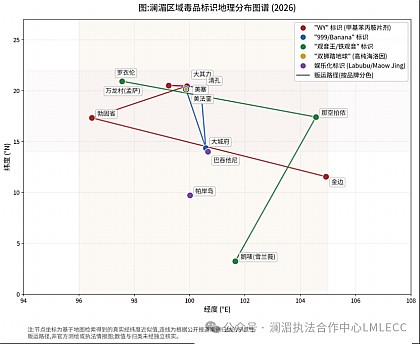
部分毒品制造及分销网络已采用统一标识和标准化包装来区分货源与分销渠道,形成了具有跨国运作特征的产品品牌体系。
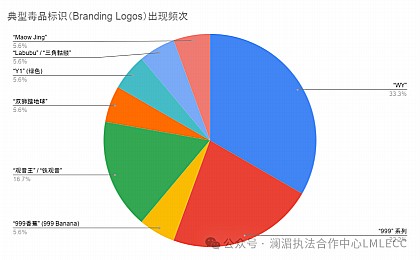
2026年上半年典型毒品标识出现频次
(数据来源:2026年1-6月澜湄区域执法动态)
2.
一方面,执法部门可通过分析相同标识特征的毒品在地理分布上的规律,在一定程度上还原该品牌的跨境贩运路径,为设定检查站或实施拦截行动提供情报依据。
3.
另一方面,不同种类的毒品开始共享相似的特征包装,这种包装上与普通物品的“趋同化”策略模糊了执法追踪线索,外观识别已经无法区分品类,必须依赖现场检测甚至实验室分析,大幅降低了边境查验的效率。
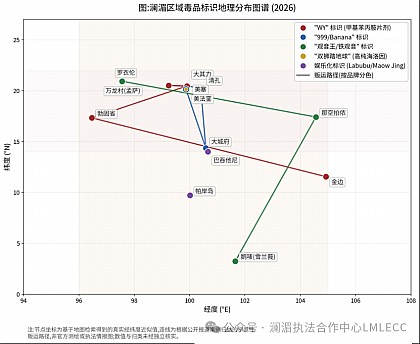
2026年上半年典型毒品标识地理分布图谱
(数据来源:2026年1-6月澜湄区域执法动态)
二
运输路径:物流多元化
1.
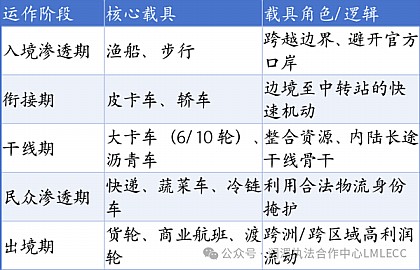
毒品运输路径呈现多方式并存的复合结构,陆路、航空、水路及海运等多种模式之间存在相互配合、多段接力转运的特征。单一案例中往往涉及两种以上运输方式的切换,使得执法部门在任何单一节点的拦截都无法阻断整体贩运链条,而只能截获其中一段。
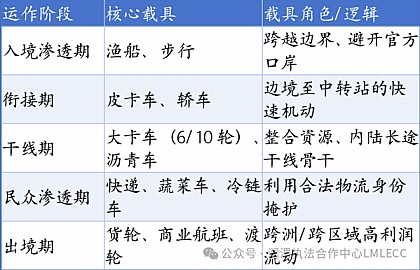
2026年上半年澜湄区域毒品贩运路径多阶段运作表(以泰国为例)
(数据来源:2026年1-6月澜湄区域执法动态)
2.
走量的陆路和水路流向于就近市场,走质的航空和海运流向于高价值远程市场。大宗毒品通过多阶段接力运输方式向内陆及跨境市场输送。多吨级海运走私及航空旅客"人体带货"等模式被用于向韩国、澳大利亚等区域外高价市场渗透。
三
技术对抗:人工智能武器化
犯罪网络已形成了一套组合式的技术对抗方案,涵盖分销、通讯和支付三个关键环节。
1.分销环节
犯罪团伙利用“响应式人工智能”实现非接触式自动分销——即通过AI自动应答系统进行订单处理、物流分发和资金结算,减少人与人之间的直接接触环节,降低被侦查风险。
已被广泛用于诈骗犯罪的深度伪造(deepfake)技术,同样可能被迁移至毒品交易的身份伪造和执法规避场景。
2.通讯环节
独立卫星通信网络使犯罪团伙能在偏远地区及跨境场景下规避传统基站监测,确保通讯安全。
Telegram等加密通讯平台正被部分犯罪团伙用于非法交易联络和洗钱活动,成为多类非法市场共享的信息沟通基础设施。
毒品犯罪在一方面共享非法市场基础设施,另一方面其交易金融结算过程将越来越依赖于其他非法市场所使用的相同加密平台和加密结算基础设施。
3.支付环节
以USDT(泰达币)为代表的稳定币已成为区域毒品经济的“标准结算货币”。
犯罪团伙基本形成了标准的洗钱路径:“法币→多层银行账户中转→购买USDT→转入数字钱包→跨境转移→变现为目标市场法币”。
上述三项技术能力的叠加,在执法部门与犯罪网络之间形成了显著的技术代差。依赖传统人力情报和物理拦截手段的执法模式正在快速丧失效能。这一技术代差的缩小,需要澜湄区域各国在技术侦查能力建设、加密通讯监控法律授权和虚拟资产追踪机制三个层面实现突破。
下一期将综合2026年上半年澜湄区域执法动态,对未来毒品犯罪形势作出相关研判,敬请关注。
英 文 摘 要
English Abstract
This part focuses on the new characteristics in the evolution of drug supply chains, trafficking routes, and technological methods across the Lancang-Mekong region during the first half of 2026. It analyzes the deep interweaving of the standardization and branding of drug packaging, multi-modal relay transportation, and the weaponization of artificial intelligence, revealing a new trend in which drug-related crime is evolving toward greater standardization, networkization, and intelligence.
Ⅰ
Trends in product standardization and branding
1.
Some illicit drug manufacturing and distribution networks have adopted common markings and standardized packaging to distinguish sources of supply and distribution channels, forming product-brand systems with transnational operating characteristics.
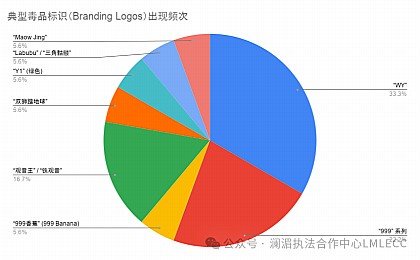
Frequency of appearance of common drug markings, January–June 2026
(Source: Law-enforcement updates in the Lancang-Mekong region, January–June 2026.)
2.
On the one hand, by analysing the geographic distribution patterns of drugs bearing the same markings, law-enforcement authorities can, to some extent, reconstruct the cross-border trafficking routes associated with those markings, providing intelligence to inform the placement of checkpoints or the conduct of interdiction operations.
3.
On the other hand, different drug types have begun to use similar distinctive packaging. This strategy of increasing packaging similarity to ordinary commercial goods obscures investigative leads. Visual inspection can no longer distinguish between drug types, requiring field testing or even laboratory analysis, which substantially reduces the efficiency of border checks.
Geographic distribution of common drug markings, January–June 2026
(Source: Law-enforcement updates in the Lancang-Mekong region, January–June 2026.)
Ⅱ
Transport routes: diversification of logistics
1.
Drug transport routes show a composite structure in which multiple modes coexist, with coordination and multi-stage relay movements across land routes, air routes, inland waterways and maritime shipping. A single case often involves switching between two or more modes of transport. As a result, interception at any single node cannot disrupt the overall trafficking chain and may only result in the seizure of one segment.
Multi-stage operations along drug trafficking routes in the Lancang-Mekong region, January–June 2026 (Thailand example)
(Source: Law-enforcement updates in the Lancang-Mekong region, January–June 2026.)
2.
Land and inland-waterway routes serve nearby markets requiring large volumes, while air and maritime routes serve high-value long-distance markets. Bulk quantities of drugs are transported to inland and cross-border markets through multi-stage relay methods. Multi-ton maritime smuggling and the use of air passengers carrying drugs on or in their bodies are used to supply high-price markets outside the region, such as the Republic of Korea and Australia.
Ⅲ
Technological countermeasures: the weaponization of artificial intelligence
Criminal networks have developed an integrated technological countermeasure framework encompassing three critical operational components: distribution, communications, and payment.
1. Distribution
Criminal groups use “responsive artificial intelligence” to achieve automated contactless distribution, meaning that AI auto-response systems handle order processing, logistics allocation and payment settlement, reducing direct person-to-person contact and lowering the risk of detection.
Deepfake technology, which has already been widely employed in telecom and online fraud, may likewise be adapted for identity falsification and law enforcement evasion in drug trafficking.
2. Communications
Stand-alone satellite communications networks enable criminal groups to evade conventional base-station monitoring in remote areas and cross-border settings, enhancing the operational security of their communications.
Encrypted messaging platforms such as Telegram are being used by some criminal groups for communications related to illicit transactions and for money-laundering activities, and have become shared communications infrastructure for multiple types of illicit markets.
Drug-related crime not only shares infrastructure with other illicit markets, but will also increasingly rely on the same encrypted platforms and crypto-enabled settlement infrastructure used by those markets to settle transactions.
3. Payments
Stablecoins, represented by Tether (USDT), have become the “standard settlement currency” of the regional drug economy.
Criminal groups have essentially established a standard money laundering pathway: “Fiat currency → multiple intermediary bank accounts → purchase of Tether (USDT) → transfer to digital wallets → cross-border transfer → conversion into fiat currency in the target market.”
The combined effect of these three technological capabilities has created a pronounced capability gap between law-enforcement authorities and criminal networks. Enforcement models that rely on traditional human intelligence and physical interdiction are rapidly losing effectiveness. Narrowing this gap is likely to require substantial progress by countries in the Lancang-Mekong region in three areas: strengthening technical investigative capacities, establishing lawful authority for monitoring encrypted communications, and developing mechanisms for tracing virtual assets.
The next installment will provide an integrated assessment of the future drug crime landscape based on law enforcement developments across the Lancang-Mekong region during the first half of 2026. Stay tuned.
稿件来源 | 《2026年上半年澜湄区域毒品犯罪形势观察》
Source | Drug Crime Situation Overview in the Lancang–Mekong Region in the First Half of 2026
版面 | 杨忻瑞、刘海瑞
Art and Layout by | Yang Xinrui, Liu Hairui
编辑 | 刘海瑞
Edited by | Liu Hairui
校对 | 谢正军、刘晓权、刘玲胜军
Proofread by | Xie Zhengjun, Liu Xiaoquan, Liu Lingshengjun
完整报告可通过中心官方网站获取。如需获取相关犯罪形势分析和对策建议,请关注后续推送内容。
The full report is available on LMLECC official website. For analysis of crime trends and strategic recommendations, please stay tuned for our upcoming updates.
免责声明 / Disclaimer
本站编辑图片有删减